
movilidades


Creatividad, bienestar y educación sin fronteras.
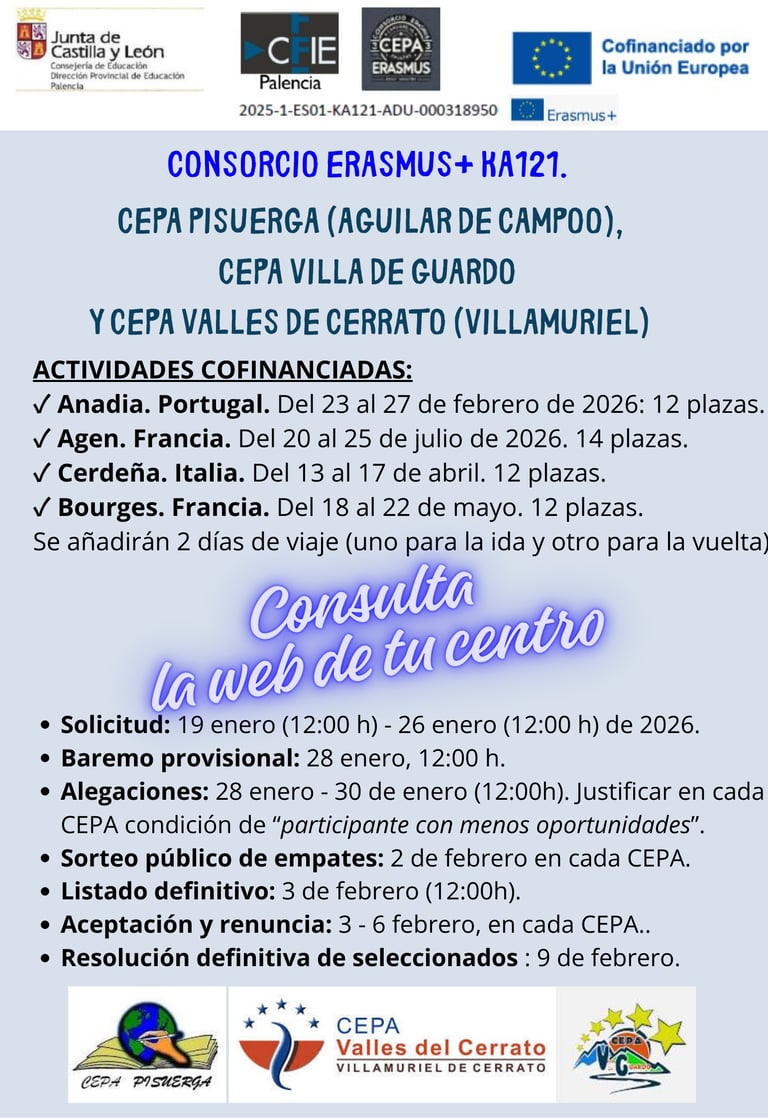
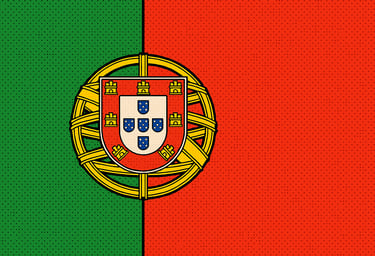
Entre el 23 y el 27 de febrero de 2026, alumnado de los CEPA Pisuerga, CEPA Villa de Guardo y CEPA Valles del Cerrato, participó en una enriquecedora movilidad Erasmus en grupo al centro portugués "Educação e Cidadania" de Mamarrosa. Esta experiencia, enmarcada en el consorcio gestionado conjuntamente por el CFIE y el Área de Programas de la Dirección Provincial de Educación de Palencia, ha supuesto no sólo un intercambio académico, sino también humano y cultural entre comunidades rurales unidas por la educación de personas adultas.
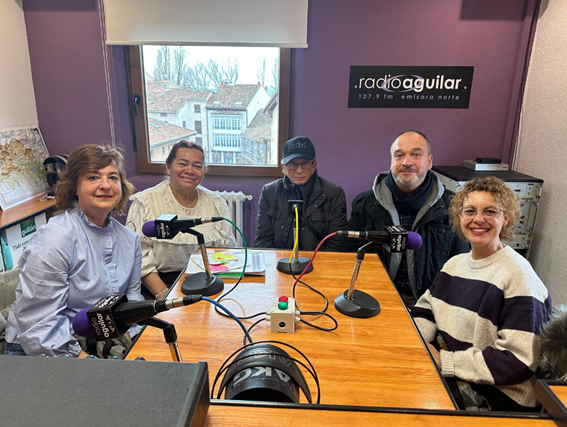
Alumnos del CEPA Pisuerga dejan su testimonio en https://radioaguilar.com/ en entrevista matinal el 04 de marzo de 2026:
Desde el primer momento, el grupo destacó la calidez de la acogida y el ambiente de colaboración. “Ha sido gratificante”, expresaban varios participantes al valorar la oportunidad de compartir aprendizajes, inquietudes y proyectos con alumnado y profesorado portugués. Otros definían la experiencia como “hermoso, se promueve la educación circular entendida como la promoción de seres interconectados que derriban fronteras”, una frase que resume el espíritu de esta movilidad: aprender juntos desde la cooperación y el respeto mutuo.
Uno de los aspectos que más llamó la atención fue el peso que el sistema educativo portugués otorga al arte y la creatividad. Las ferias de arte populares, donde se exponen trabajos del alumnado y de la comunidad, evidencian una apuesta decidida por la cultura como motor de cohesión social. En una biblioteca pública, por ejemplo, un mural inspirado en el Guernica sirve de fondo para exhibir obras de artistas contemporáneos al tiempo que se difunden creaciones locales, simbolizando el diálogo entre tradición y modernidad.
Asimismo, se valoró muy positivamente el enfoque en la educación del bienestar y la salud del alumnado, así como la alta cualificación del profesorado y su sólida preparación en idiomas extranjeros dentro del sistema público. Talleres de pintura, costura y manualidades, integrados en la enseñanza de adultos, muestran una concepción amplia del aprendizaje, donde lo artístico y lo práctico conviven con lo académico.
La visita también permitió descubrir la identidad cultural de Mamarrosa, cuyas calles cuentan la historia local a través de su propia toponimia, inspirada en el rostro de una mujer que simboliza la comunidad. Este detalle fue interpretado como una metáfora del arraigo y el cuidado de la memoria colectiva.
El encuentro entre estudiantes de distintos CEPAS rurales reforzó el objetivo del consorcio: tejer redes, compartir buenas prácticas y abrir horizontes más allá del entorno inmediato. Entre las reflexiones finales surgió una reivindicación clara: la necesidad de avanzar hacia currículos más flexibles en España, que permitan integrar de forma más decidida el arte, el bienestar y la conexión con la comunidad.
El grupo quiso expresar un profundo agradecimiento al pueblo portugués por su hospitalidad y, de manera especial, al equipo del centro anfitrión y a su coordinador, Richard Marques, por hacer posible una experiencia que deja huella y que reafirma el poder transformador de la educación cuando se vive sin fronteras.
¡OBRIGADO, AMIGOS PORTUGUESES!
From the 23rd to 27th of February 2026, students from CEPA Pisuerga, CEPA Villa de Guardo and CEPA Valles del Cerrato took part in an enriching Erasmus group mobility to the Portuguese centre Educação e Cidadania in Mamarrosa. This experience, launched by the consortium jointly managed by the CFIE and the Programmes Area of the Provincial Board of Education of Palencia, represented not only an academic exchange, but also a human and cultural exchange between rural communities connected through adult education.
Students from CEPA Pisuerga shared their testimony on https://radioaguilar.com/ during a morning interview on the 4th of March 2026.
From the very beginning, the group highlighted the warmth of the welcome and the collaborative atmosphere. “It has been rewarding,” several participants stated as they reflected on the opportunity to share learning experiences, concerns and projects with Portuguese students and teachers. Others described the experience as “beautiful; circular education is promoted, understood as fostering interconnected human beings who break down borders,” a phrase that perfectly captures the spirit of this mobility: learning together through cooperation and mutual respect.
One of the aspects that most impressed the group was the importance the Portuguese education system places on art and creativity. Popular art fairs, where students’ and community members’ work is displayed, demonstrate a clear commitment to culture as a driving force for social cohesion. In a public library, for example, a mural inspired by Guernica serves as a backdrop for exhibiting contemporary art pieces while also showcasing local creations, symbolising the dialogue between tradition and modernity.
The strong focus on student wellbeing and health was also highly valued, as was the high qualification of the teaching staff and their solid preparation in foreign languages within the public education system. Workshops in painting, sewing and crafts, integrated into adult education, reflect a broad understanding of learning, where artistic and practical dimensions coexist with academic content.
The visit also offered the opportunity to discover the cultural identity of Mamarrosa, whose streets tell the local story through their toponymy, inspired by the face of a woman symbolising the community. This detail was interpreted as a metaphor for rootedness and the care of collective memory.
The meeting between students from different rural CEPAs reinforced the consortium’s goal: to build networks, share good practices and broaden horizons beyond the immediate environment. Among the final reflections, one clear demand emerged: the need to move towards more flexible curricula in Spain, allowing for a stronger integration of art, wellbeing and community connection.
The group expressed deep gratitude to the Portuguese people for their hospitality and, in particular, to the host centre’s team and its coordinator, Richard Marques, for making possible an experience that leaves a lasting mark and reaffirms the transformative power of education when it is lived without borders.
¡OBRIGADO, AMIGOS PORTUGUESES!
Dirección
CALLE FERNANDO EL MAGNO, S/N
34004 PALENCIA (PALENCIA)
Subscripción a la lista de correo con las convocatorias de actividades formativas del CFIE de Palencia.

